Showing posts with label quote. Show all posts

28 August 2014

Trying to write something to go with these photos, and I'm coming up a bit dry. There's no reason for that, though--there's so much I could say. Maybe I feel like I've said it already. Another backpacking trip; another stretch of mountain scenery, another story that's better experienced than told. Still, it was a good experience: bright mornings and cool evenings, occasionally brutal scrambles up rocky trails, sunrise and sunset from mountain ridges.
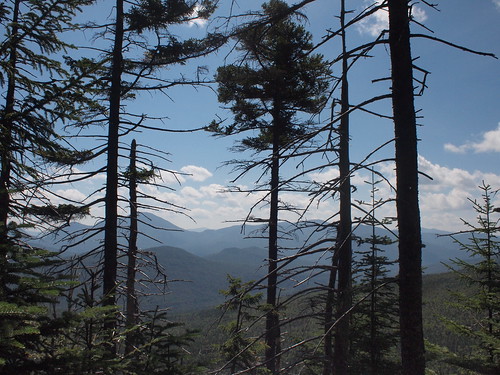
This time I was in Pemigewasset Wilderness in White Mountain National Forest, which I guess gives me the opportunity to reflect on our national wildernesses, the definition of wilderness, things like that. The Wilderness Act turns fifty this year. Pemigewasset itself was designated in 1984, so its federal designation is only thirty years old--though of course, the land is much older than that, which is perhaps what makes the designation important: it's a decision of leave this be. I passed a rusted out stove from a logging camp back in the woods, a mark of history and human presence--though of course the trails I was walking were also a mark of human presence. But for the most part the forest was quiet, and when I set up camp for the night the silence was a weighted reminder of my distance from roads and people. Whatever has happened, the forest rebounded, perhaps different but still real and vital. 
p.s. For another angle on national wildernesses, head on over to High Country News.

31 July 2014

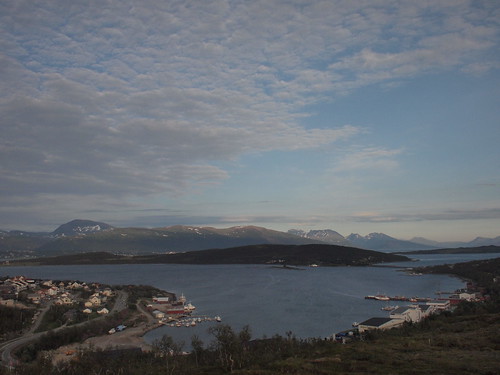
Well. I'm leaving Norway. And I feel a little bit of everything: wild hope for whatever comes next, eager anticipation for home, muddled regret at leaving this place where I've been for the past year and a half. Tromsø has been good to me. As I leave I hold that goodness in my head, coupled with another fact: it's time to go.

There's a quote from 'Walden' (if I haven't quoted 'Walden' enough in this blog): "I left the woods for as good a reason as I went there. Perhaps it seemed to me that I had several more lives to live, and could not spare any more time for that one." Right now Norway feels like a life I have lived out, and although there is more to this country--I haven't nearly plumbed its depths--it doesn't feel like there's more here for me right now. That's partly because what's here for me is the university, and I feel more than ready to put the strange cloister of universities behind me. And that's partly because--well. Sometimes the time comes to make a decision, and right now my decision is America and uncertainty, because I want to see what I find there. Between Norway and Canada, I've been gone for some time. 

I might have more to say, about what this place has given me, about what this place is. About the things I'm leaving and the things I'll miss. At the moment, though, it's hard to see much beyond the transition. I wonder, vaguely, about reverse culture shock. I look forward to seeing family and old friends. But over my last few weeks I've stood in these mountains, or down by the sea, and felt something pure and clear that I can only call love for this place. And now I'm leaving it behind indefinitely for somewhere familiar that feels a little bit foreign, and although I'm looking forward I can't help but pause at the gate to look back. So I'll say it: Tromsø, I'll miss you. And whatever the future holds, I hope my experiences here can be a moveable feast; at the very least, I am certain I will carry them with me into the future, although I'm uncertain what guise they'll take. 

10 June 2014

I graduated a few days back, I guess. In Saskatoon, it was convocation, and my graduate degree was formally bestowed upon me, although I was not there to receive it. Thanks to the mail and the transitive properties of degrees, though, I'll still be getting that piece of paper eventually, and I have the dubious privilege of saying that I hold a master's. And now I have the similarly dubious privilege of saying "What next?"

I got an email from my department on the occasion of my graduation containing that old chestnut that's ostensibly from Thoreau: "Go confidently in the direction of your dreams. Live the life you have imagined." I recently re-read 'Walden' and in their original place I can milk some meaning from those words, but denuded of context, as they so frequently are, those two sentences become the sort of meaningless platitude that's difficult to do much with. By contrast, here's the actual quote:

"I learned this, at least, by my experiment: that if one advances confidently in the direction of his dreams, and endeavors to live the life which he has imagined, he will meet with a success unexpected in common hours. He will put some things behind, will pass an invisible boundary; new, universal, and more liberal laws will begin to establish themselves around and within him; or the old laws be expanded, and interpreted in his favor in a more liberal sense, and he will live with the license of a higher order of beings. In proportion as he simplifies his life, the laws of the universe will appear less complex, and solitude will not be solitude, nor poverty poverty, nor weakness weakness. If you have built castles in the air, your work need not be lost; that is where they should be. Now put the foundations under them."

If, Thoreau wrote, and that makes such a difference. It's not a command or an imperative, just a possibility, an option. But it's a possibility with the radical potential to carry a person across borders into fresh country.

So I don't know what's next. I'm weighing possibilities, or perhaps more rightly, I'm weighing dreams: one against the other, this against that. Nothing is ever as simple as a platitude, and most people can't live in air castles. For now, though, I'm comfortable living in this liminal place while I sort myself out. It's not tenable indefinitely, but it'll do in the interim.

27 April 2014

19 April 2014

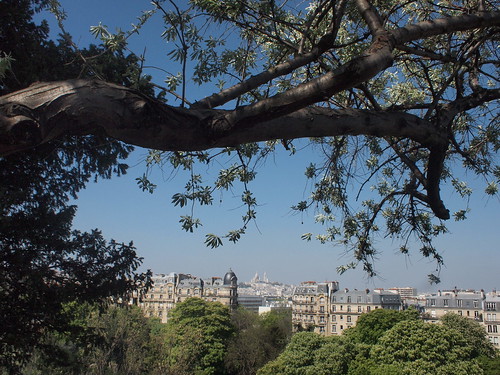
Paris was next on my whistle-stop tour, and I threw it in at least partly because I overdid it on Hemingway this fall. Well, not just Hemingway; there's also Rilke, who wrote: "I am in Paris. People who hear this are glad; most of them envy me. They're right. It is a great city, great and filled with strange temptations." While here, I visited the Musée Rodin and learned that Rilke and Rodin were friends, and wondered, as I ambled past shops and brasseries, who of these writers and artists had been here, or here, or here. But I also wondered about our ideas of Paris, the way the city is structured in our minds. I hadn't entirely wanted to come here. I didn't need to see the Eiffel Tower (though now I have), and something about this city's reputation--pretentious, romantic--never quite captured me. Except then--reading about the Lost Generation, reading Rilke's 'The Notebooks of Malte Laurids Brigge'--it did. So I added Paris to the itinerary.
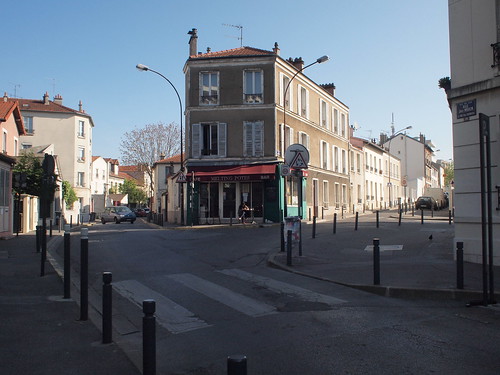
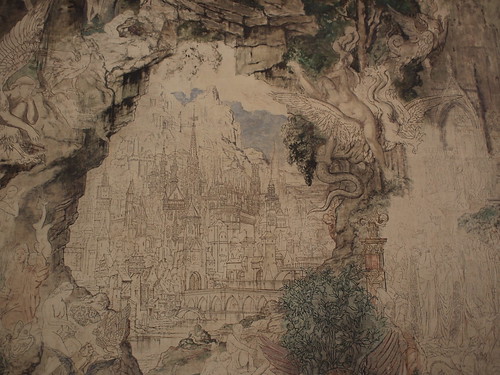
I rented a shoebox apartment for the handful of nights I was in the city, on the fourth floor of a canalside building on the north side of town, close to the Parc des Buttes Chaumont. To reach most of the conventional tourist sites I had to catch the metro or trek several miles, but the neighborhood was lively and I could get a baguette and an almond croissant from the bakery on the corner for just over two Euros, which is a privilege that shouldn't be discounted. The New York Times recently ran an article called 'My European Ritual,' which asked the residents of various European cities to describe their rituals. For the few days I was there, my Paris ritual was as simple as this: going down four flights of spiral stairs, walking to the corner, buying a baguette and an almond croissant, eating the croissant for breakfast while I drank tea and made the baguette into sandwiches. It's the sort of touchstone that makes away feel a little bit like home. And then I would walk out into the city, which was awash with sun, which was very old and very large and had plenty of stories to tell. I didn't have time to listen to all of them, but I heard a few--most notably in the small, idiosyncratic, Musée National Gustave-Moreau--and that was enough to convince me: Paris is a great city, and so much more than I had (naively, I think) anticipated.

25 February 2014

It's the same old story, really, and I want to dust off the same old quote from Thoreau--"The surface of the earth is soft and impressible by the feet of men; and so with the paths which the mind travels."--because my mind's been circling around like it hasn't got anything better to do. Maybe it hasn't. But I recently read another piece about home, and about the way we as humans upend our lives to move between places and countries. It's called 'On Not Going Home', and it's by James Wood, a English ex-pat living in America. It's a long one, and I'm not going to try to offer a precise summation; mostly I want to burrow back into my own feelings about living abroad. The subject dogs me.

Over the summer I picked up a copy of Hemingway's 'A Moveable Feast,' and I read it this fall, looking for some sort of insight about what it means to be an American abroad. I didn't find it. I am not Hemingway (nor was meant to be); the Lost Generation isn't mine; Tromsø isn't Paris (I have hopped from one city nicknamed after Paris to another; Saskatoon is ostensibly 'the Paris of the prairies', and Tromsø's been called 'the Paris of the north'). Hemingway's Paris was not just the city: it was Gertrude Stein and F. Scott Fitzgerald, Ezra Pound and James Joyce. I have a ragged sort of community here in Tromsø, but I wonder at how American Hemingway's Parisian community was, fundamentally.

Even if Hemingway's expatriate life was a different breed then mine, the quote the title of 'A Moveable Feast' was drawn from aligns with how I see the world: "If you are lucky enough to have lived in Paris as a young man, then wherever you go for the rest of your life, it stays with you, for Paris is a moveable feast." I've never been to Paris, but I carry moveable feasts with me nonetheless; sometimes it seems that every place I've ever lived is somewhere in the knapsack of my mind. This week I was reading Donna Tartt's 'The Secret History', which takes place at a thinly veiled simulacrum of Bennington College and sends its characters gallivanting around the tri-state area. The book is about a murder and the leads are largely unsympathetic, but the landscape is familiar and the writing is evocative, and when the characters stopped in at what could only be the Cambridge Hotel (again, thinly veiled, but I can't imagine it's a place many would bother to recognize), something inside me ached. It's been a little while since I felt something I could tag so completely as homesickness; I savored it.

Which brings me back around to Wood's essay, where he notes, "For me, English reality has disappeared into memory, has ‘changed itself to past’...In America, I crave the English reality that has disappeared; childhood seems breathingly close." Wood has lived outside his home country for 18 years; I will not pretend I can match that measure. But I think Wood captures a fundamental piece of the moveable feast: the places we depart primarily live, for us, as part of the past. The Cambridge Hotel has, after all, closed. Hemingway's Paris was people as well as place. This is not to say--this is not to say anything in particular, except that maybe even a place that counted as home will not be the same on return. I am charting a course home, now, but I rather suspect that whatever I find there will be nearly as foreign to me as what I've found here; that the place I miss is not just a place, but a time. Still, my moveable feast feeds me well.

16 October 2013

Psalm Above Santa Fe
--------16 March 1987

What is it we
---------come to
----------------between mountains,

long crests tipped white,
---------dusted on their flanks, while
----------------light spreads out

before us,
---------pouring in our lap
----------------soft as iris tongues,

and
---------the lungs finally
----------------filled with freshness

unwilled
---------because unlooked for:
----------------sparse grass,

rocks
---------announcing in a weathered language
----------------something eyes

seem to have known
---------before they came to the way
----------------called sight.

Even the animals at dusk,
---------could we see them stare at us,
----------------have such souls.

-John Judson, 1987

Add to the list of books I have been reading: Kurt Vonnegut: Letters, which offered the following relevant quote: "For me, poems are presents to be exchanged within an extended family." I've wondered about the strict legality of Wednesday poemday, since I'm reprinting without permission. But I make no profit from this; but good poems seem to benefit from being passed around. 

06 October 2013

"Then, again, in mountainous countries where the traveller is continually girdled by amphitheatrical heights; here and there from some lucky point of view you will catch passing glimpses of the profiles of whales defined along the undulating ridges. But you must be a thorough whaleman, to see these sights; and not only that, if you wish to return to such a sight again, you must be sure and take the exact intersecting latitude and longitude of your first stand-point, else--so chance-like are such observations of the hills--your precise, previous stand-point would require a laborious re-discovery..."

-Moby-Dick, Herman Melville

01 October 2013

I've acquired a habit that I deplored when I was younger: reading several books at once. Right now I have bookmarks in five volumes (when I was younger I also refused to use bookmarks and memorized the number of the page where I had stopped instead, but that was always kind of stupid), though I would argue that at least three of them are intended to be read piecemeal. One of those three is 'The Norton Book of Nature Writing,' which I've been working my way through since last spring. The anthology is organized chronologically by author birth year which means that I've only now, around page 1000, reached Barbara Kingsolver and her essay 'High Tide in Tucson,' which I read this morning while I gave my frying pan some time to cool in between frying my bacon and potatoes and frying an egg.

These are times when a book gives you a small, perfect gift, and that's how I felt this morning with my feet kicked up on the coffee table. It's a beautiful essay. If I could I would reprint it here for you in its entirety, but it runs for ten pages in small print, and I haven't got the time or the reprint rights. As I write this I have my book propped open with my left elbow, and I'm trying to find a quote that captures the essence of this in a jar, because this morning it spoke to me so clearly, held me riveted while my tea grew cold. It said things I have tried to say, but it's better than anything I ever managed. 

26 July 2013

I meant to write this ages ago, and I didn't. Life happened, I guess. And now I'm home, after returning to Norway and a stopover in Iceland. I'm home. From Moby-Dick (which I'm still making my way through):

"Round the world! There is much in that sound to inspire proud feelings; but whereto does all that circumnavigation conduct? Only through numberless perils to the very point whence we started, where those that we left behind secure, were all the time before us.

"Were this world an endless plain, and by sailing eastward we could for ever reach new distances, and discover sights more sweet and strange than any Cyclades or Islands of King Solomon, then there were promise in the voyage. But in pursuit of those far mysteries we dream of, or in tormented chase of that demon phantom that, some time or other, swims before all human hearts; while chasing such over this round globe, they either lead us on in barren mazes or midway leave us whelmed."

Part of Iceland is about the sights. The place is, on the whole, strange; steam rises from the ground, and you can see where the earth has split open and filled itself in. The island itself is expanding. But it's still a small place, with a small population, and a peculiar history. But, like a lot of places, its residents are proud of it, proud of themselves. I don't blame them; I think I envy them.

Iceland is a country of settlers, but Icelanders have sagas that date back to the 10th and 11th centuries. And there's something about that appeals to an American with loose roots. I find--have found--the myths of Native Americans hugely appealing, primarily because they come from the place I'm from. But they don't belong to me, and there are times--well, there are always times. But maybe ownership isn't the most important thing. After all, I have no claim to Iceland, but I can still go there, still read the Icelanders' sagas. All sorts of things are open to me.

But for now, I'm back on American soil. There are plenty of stories here that are mine, mostly because I made them.

28 June 2013

I left Vienna by train this morning, and my time in Austria drew to a close. I feel like I should have something to say about this, and about Austria. I managed to write two posts on Croatia, after all. And I stayed in Austria longer.

Maybe I just can't tease apart all the things I might say. I spent my last afternoon in Austria in the Wien Museum, a museum dedicated to Vienna and its history, and it reminded me of how little I know about Europe. I was supposed to take A.P. European History my senior year of high school, but because of a scheduling conflict I ended up in A.P. U.S. History instead. Not that I regret that or think a high school history class would've remedied my deficiencies, just that--well. I'm learning a lot about these countries and cities just by being in them, walking the streets and stumbling upon what I stumble upon. But the more you know, the more you realize you don't know.

Wandering around Vienna's city museum, browsing artifacts and reading the English explanations, I was reminded of what I don't know, and also of what I should've known already: these places are old. That city has old bones, and over the years it has been many things, in one place: a central part of the Holy Roman Empire, occupied by Hungary, under siege by the Turks--twice--and that's all before 1800. A handful of days is hardly enough to get a handle on all of that. Instead, about all I did was find an ice cream place I liked and eat a lot of street food.

Honestly, though, I'm okay with that. When I visited Croatia I touched on the fact that there's a surfeit of experiences I didn't have, things I didn't see, but that's not where I want to dwell. There will always be more. The world is more. I'm pretty sure there's a song about this in the Lion King, actually. But I'm not trying to do everything--instead I'm trying to do something, to throw myself into each place as I visit it and get a bit of a feel for what makes it tick, even if I haven't got the time to learn the precise workings of the clock.

What's the purpose, though? Every so often I pass other Americans, travelers, on the street. Overheard in a crush of people, someone's saying: "And that's when I learned to love Nutella." I've talked with a few other backpackers, sitting on the floor in train stations, and it leaves me wondering--is this whole thing, American-in-Europe, purely self indulgent? What does it accomplish to leave the country only to find your countrymen on the other side of the ocean?

Oh, it might be self indulgent, and it might not accomplish anything at all. It's okay for a vacation to just be a vacation. Sometimes I think we try to collect experiences like talismans, like the process of collecting them is its own end. I'm not sure that's quite right. But every process is a learning one, or might be, and we never know when we might find something that we've been looking for for a very long time, or when we might learn something that helps another piece of knowledge click into place. There is a quote from Rainer Maria Rilke's 'Letters to a Young Poet' that I first encountered on a plane bound for Alaska, what, now, seems like eons ago: 

"Be patient toward all that is unsolved in your heart and try to love the questions themselves, like locked rooms and like books that are now written in a very foreign tongue. Do not now seek the answers, which cannot be given you because you would not be able to live them. And the point is, to live everything. Live the questions now. Perhaps you will then gradually, without noticing it, live along some distant day into the answer."

Rilke, I feel like I should note, was an Austrian, but he was born in Prague, which is the city the train I boarded this morning brought me to. So. I guess that's something.

29 April 2013

Today I'm sitting down with my data, again, turning it over and trying to make it into a cohesive figure. I've jotted notes, somewhat haphazardly, in a series of notebooks. 'What are the values at play?' one says. 'If we assume every researcher is imposing a narrative on her subject--what is my narrative?'

There was an article in the New York Times this weekend about academic fraud, about a researcher who completely fabricated data sets for multiple studies. My data is real, but there's something about turning information into results, imposing a narrative, that makes it easy to see how someone could go one step further and just build the narrative from scratch. This fall I had to present my research as part of my degree requirement, despite the fact that my data collection was still in progress and my results were nebulous at best. So instead I presented information about my proposal and quotes from individuals I had interviewed, coupled with a quote from 'Wisconsin Death Trip' that had nothing to do with my research at all. The quote, from Michael Lesy, runs thus:

"This book is an exercise in historical actuality, but it has only as much to do with history as the heat and spectrum of light that makes it visible, or the retina and optical nerve of your eye. It is as much an exercise of history as it is an experiment of alchemy. Its primary intention is to make you experience the pages now before you as a flexible mirror that if turned one way can reflect the odor of the air that surrounded me as I wrote this; if turned another, can project your anticipations of next Monday; if turned again, can transmit the sound of breathing in the deep winter air of a room eighty years ago, and if turned once again, this time backwards on itself, can fuse all three images, and so can focus who I once was, what you might yet be, and what may have happened, all upon a single point of your imagination, and transform them like light focused by a lens on paper, from a lower form of energy to a higher."

I am writing a thesis. It is probably going to be at least a little drier than I would like it to be, and the narrative atop it, in the interest of honesty, will probably not be much of a narrative at all; more of an outline than anything fully fleshed. But there's something beneath all of that, outside the tidy box of science, and that's my experience of writing this thesis, conducting this research. Sometimes I get tired just thinking about it, and the whole thing feels like my pound of flesh, and sometimes I...don't, and it doesn't. Instead it feels like something I know how to do, something I've known how to do. It feels like a story I've been given the chance to pull from the ore.

I'm sitting in my office now. It's the second office that has hosted me during this process. To my left is a drained mug of hot chocolate. To my right is a pen, a spoon, my wrist brace, and a pile of cards with a snapped rubber band atop them. Printed on each card is a statement about chronic wasting disease. These cards are one of my research instruments.

Because my research is mostly qualitative, as opposed to quantitative, my other research instrument is myself. My data is being pulled through the cheesecloth of my mind, and as a result, my results, if turned one way, will almost certainly reflect things that only I can see: to me they will reflect summer in Manitoba, sitting on the grass outside the Riding Mountain visitors' center and trying to round up participants; fall in Saskatchewan, when Prince Albert turned gold; driving through both provinces on dark winter nights with snow blowing across those straight, steady roads. And here, in Tromsø, miles away from those places, trying to figure out what the story is I'm telling.

There have been so many times in my life when I've stared at my own history like a scrying glass, trying to figure out what story it tells, trying to project the past onto the future. Even if my narratives feel like an imposition, what I'm doing with my data is not so different from what I've done forever; what everyone does, I think, as we try to make sense of our surroundings. Diederik Stapel, the aforementioned academic fraud, was unable to let the incongruities that emerged during that process stand. His story says a lot of interesting--and I think true--things about academic culture, but when I look at the incongruities in my research I can't help but wonder if they're the most important part, because they challenge us. They challenge me to lay aside the things I had expected to be true and confront the things that are.

A while back, I wrote about research and cameras and objectivity. And some other stuff--I tend to write discursively, always, but especially here. As I sit here, my own flawed research instrument with my own flawed data set, I feel comfortable forsaking objectivity, because I think, if I am translucent enough in my narrative building, it will emerge anyway. There's a quote I keep pinned above my desk, from Richard Hugo's book "The Triggering Town": "I doubt that academic writing will improve until academics believe Valéry, who said he couldn't think of anything worse than being right." In Hugo's book, which is about poetry, it's barely an aside, but above my workspace it's a reminder: I am neither objective nor right. I can try to tell the truth as far as I can see it, but when I encounter something that is murky and opaque to me, the stone that worries my shoe--that's okay. The story the data tells belongs to my research participants, not to me. But, more importantly, nearly every story we draw from reality is dogged with inconsistencies. The process of storytelling is sanding them down, varnishing them to a high gloss, but not eliminating them. And that's a good thing, because it's the grain in the wood that shows us it's real, it came from a true thing. When the grain repeats itself, when it becomes unnaturally regular, when we knock on it and it echoes strange, we can tell the fraud for what it is.
22 April 2013

It's Earth Day. I've nodded to Earth Day before in this blog, but most ways you slice it it's a weird holiday. Not really a holiday at all, actually. I was reading this breakdown of the American environmental movement, which also includes a brief history of Earth Day. The explanation there serves to demonstrate that Earth Day really isn't a holiday at all--it was initiated as a teach-in.

I don't have much to teach here. If you read the article, my views probably align with Aaron Sachs's, and, as Nicholas Lemann, the article's author, writes: "Sachs’s ruminative, associative style...isn’t well suited to forcing a main argument out into the open." I think Lemann might mean that Sachs isn't well suited to presenting a policy solution to our environmental problems. Here's something that shouldn't surprise you: neither am I. If I peel back my mixed feelings, the only thing I'll say with any certainty is that I think if you can convince people the environment is worth something, is important for itself, conservation, environmentalism, or whatever it is will come more easily.

For the past few days I've been in the mountains on a ski trip with a group from the university. It was nice to slip away from the things I should be doing (coughthesiscough), though on the bus ride back to the city they all came rushing back. And yet--today, the shadow of my pack is still on my shoulders (I'm sore, I'm saying that I'm sore), my computer in my lap, I still know that the woods and the mountains are there.

It's difficult to balance, though, because I come back to civilization and immediately flip open my laptop. I go to the grocery store and buy chocolate and orange juice (and some other stuff, because that's not a balanced diet). I don't stay in the woods or the mountains. The little backcountry huts that pepper Norway's mountains are cushier than what you'll find in much of the world's backcountry, but they still aren't wired for electricity, for internet, for amenities that have become expected. And we have the privilege to return to these things, and are comfortable in the knowledge that we're roughing it, but this isn't permanent. Would I be as comfortable with the mountains, as pleased to know them, if I was trying to carve my life from them, if I wasn't going to catch a bus back to town at the end of the weekend?

I don't know. I don't know if I want to plumb those depths--the ones about the environmental movement and class, about how we use the land, about the myths of wilderness--right now. I'm not sure I can end this cleanly or easily, myself, so I'll leave you with a quote from Aaron Sachs by way of Nicholas Lemann and be done with it:

My hope, for all future generations, is that they will have (in addition to sunshine, fresh air, clean water, and fertile soil) a somewhat slower pace of life, with plenty of time to pause, in quiet places... haunted places—everyday, accessible places, open to the public—places that are not too radically transformed over time—places susceptible of cultivation, where people can express their caring, and nature can respond—places with tough, gnarled roots and tangled stalks, with digging mammals and noisy birds—places of common remembrance and hopeful guidance—places of unexpected encounters—places that breed solidarity across difference—places where children can walk in the footsteps of those who have gone before—places that are perpetually up for adoption—places that have been humanized but not conquered or commodified—places that foster a kind of connectedness both mournful and celebratory.

09 April 2013

I've been back in Tromsø for a week--long enough to have restocked my fridge not once but twice--but I had meant to write something about all the time I spent on trains and buses (and sometimes boats) while I was away. And then I try, and find there isn't much to say. I mean, you don't need me to tell you how to book a train ticket. It's no different from booking a ticket for anything else. And I bought all my bus tickets on the bus.

Here's something really obvious about bus and rail travel: you see a lot. I saw reindeer in the mountains. I saw people ice-fishing in fjords. I saw long stretches of Norway, basically. Sometimes I slept instead of seeing, because every landscape has the capacity to become ordinary.

Today I was reading some words from Robert Bly about Olav H. Hauge, whose poetry Bly translated from Norwegian into English. Hauge lived his entire life in Ulvik, which is somewhere I did not pass through on my travels. Still, I imagine I could have. This is what Bly has to say about Hauge's lifestyle: "If you have a tiny farm, you need to love poetry more than the farm. If you sell apples, you need to love poetry more than the apples. It's good to settle down somewhere and to love poetry more than that. Lewis Hyde, in his great book The Gift, discusses the nature of the old precommercial gift-giving society. The economy of scarcity, he says, is always associated with gift-giving. Olav H. Hauge lived in a gift-giving, pre-communal society all of his life. The richness in his small house lay in the handmade spoons and bowls, the wooden reading chair, and the bookcases to which the best poetry from many continents had found its way."

It's worth noting, maybe, that The Gift is one of my favorite books. But that's not the point I was trying to make by pulling this quote. I recognize something in Bly's description, something I spent two weeks staring out windows at. Sitting on the couch with my mother's cousin, she commented on how much I had moved around compared to her family. There's not much to say for it. It would be completely false to say people in Norway don't move and people in the U.S. do. No--it's just that there's something in the small towns here, the ones that are just a handful of houses between the ocean and a mountain, that feels hard-won.

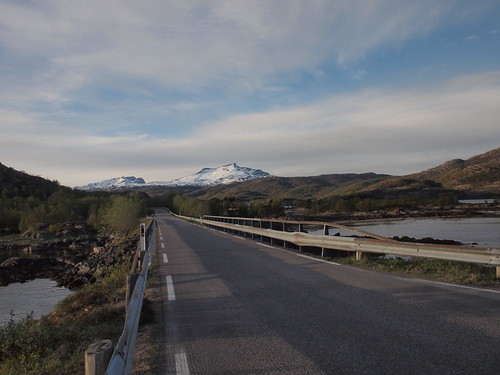
There are towns like this in Saskatchewan, too. There are towns like this in the U.S. But Norway, to those of us who aren't from here, sometimes becomes a picture or a postcard, with everything directed to the picturesque and no thought given to what undergirds it. And sometimes the infrastructure is the most striking of all: this is a place, real and whole--no mere wilderness, no mere tourist destination. The richness, to borrow one of Bly's words, is what makes it worthwhile, is what keeps me from tearing my eyes from the window as the countryside slides past.

24 February 2013

It seems sort of inevitable that I write something about language here. One night in the beginning of winter in Saskatoon a group of us were sitting around on the floor of someone's cruddy apartment and the conversation came around to languages, which ones we liked best. "English," I said. "Because I can swim in it." And it was true then, and it's still true now. Of course I can swim in English--I'm native to it, as surely as a fish is native to water. And I've been thinking about that with renewed clarity, here in Norway where all around people speak languages that are as opaque to me as walls.

I am taking Norwegian. I am not especially good at it, but of course learning a new language takes time. I'm pretty canny about figuring out the meanings of written words, but my ability to understand the spoken language is sub-minimal, and my pronunciation is nothing short of atrocious. I've always had trouble keeping the correct pronunciations of words--even English ones--in my head, but Norwegian relies heavily on sounds I'm not even sure how to make. And so I fumble along, repeat words aloud to myself over and over again, wonder if this is why I had to go to speech in elementary school (the answer to that last one is: probably not, but it would be a convenient excuse).

The whole process of learning how to speak again has been like that joke David Foster Wallace told at the beginning of his famous commencement address: "There are these two young fish swimming along and they happen to meet an older fish swimming the other way, who nods at them and says, 'Morning, boys. How's the water?' And the two young fish swim on for a bit, and then eventually one of them looks over at the other and goes, 'What the hell is water?'" I use English to interpret the world, to describe it, and sometimes I forget that other languages aren't just a translation of mine. The most fascinating thing about learning a new language is when the words fail to translate, especially when it feels like they should--the word 'fjord', which English has adopted from Norwegian, has not actually retained its meaning in the transfer. Translated, the Norwegian word 'fjord' actually means 'inlet,' because the English definition of 'fjord' is narrower. So words don't translate, sentences aren't shaped the same, and sure, Norwegian is closer to English than English is to Chinese or Arabic, but it's also different enough to remind me: English exists. It may seem to be a clear lens through which to interpret the world, but it's still a lens.

And a lens is a tool. Part of the reason the American school system isn't particularly invested in teaching foreign language skills is, I suspect, that English is so prevalent--and, because English is so prevalent, people who speak rarer languages learn it. I've never had any trouble finding someone who speaks English here. Everyone does.

I do, however, occasionally have trouble communicating, because for most people the language they speak as a second language is going to be necessarily different from the language that's their first--as my terrible German and perfunctory Norwegian demonstrate. I'm functionally a monoglot among polyglots, and it makes me realize that while I don't need another language, I want one. I have friends who are consummate polyglots, collecting languages like I used to collect buttons. I never really got the appeal. But I think I see it now: it's in the cracks that manifest themselves in the process of translation, and in the way a new language can serve as a foil to your native tongue. And it's also about communication because, oh, sure, people speak English. In Norway, especially, they speak English well. But it's not the language they're native to. And it seems unfair, somehow, that I ask everyone to come swim in my language without ever venturing into the waters of theirs (frigid though they may be). So: snakker du norsk? My answer remains 'Nie, jeg snakker engelsk', but I'll keep working on that. 

30 September 2012

I'm reading Moby-Dick. The last time I read it I was about ten and tackled the book because (a) it was big, and (b) my dad said he'd pay me twenty bucks (which he did). At the time, twenty bucks had seemed like it would buy very nearly anything a person could want--now I can only think of all the things twenty bucks wouldn't buy me: groceries for a week, a tank of gas, a visit to the doctor. Those are also things that, at ten, I would have had little interest in purchasing.

Moby-Dick, though. I'm not far in. I'm reading it slowly, which I suspect is the only way to read it. I remember very little of it (Queequeg is the sum total of what I remembered that isn't included in the category of 'general knowledge about Moby-Dick most people have').

I'm surprised by how much I like it. Everyone knows "Call me Ishmael" (don't they?) but I like what follows:

"Some years ago--never mind how long precisely--having little or no money in my purse, and nothing particular to interest me on shore, I thought I would sail about a little and see the watery part of the world. It is a way I have of driving off the spleen, and regulating the circulation. Whenever I find myself growing grim about the mouth; whenever it is a damp, drizzly November in my soul; whenever I find myself involuntarily pausing before coffin warehouses, and bringing up the rear of every funeral I meet; and especially whenever my hypos get such an upper hand on me, that it requires a strong moral principle to prevent me from deliberately stepping into the street, and methodically knocking people's hats off--then I account it high time to get to sea as soon as I can."

No wonder I don't remember Moby-Dick. I didn't get half of it. It reminds me of that Conan bit where he writes blues with children, and it makes me wonder about the books we relate to and the ones we don't, because I think the ones we relate to are the ones we remember. Oh, to be sure, I've never set foot on a whaler (unless you count Boston Whalers). I'm not even a person prone to strong bouts of depression. But I know a thing or two about moving around, and I've had a few drizzly Novembers of the soul. At ten? Well. I wanted twenty bucks to buy candy and stuffed animals. So, you know where this is going. Books don't change, but we do.

01 July 2012

If I had a penny for every time someone asked me about differences between living in the U.S. and living in Canada...I'd have a few pennies, but, because Canada is phasing out pennies (just like my old pal New Zealand), they wouldn't be worth much on this side of the border. So that's one difference, right there. But it's a valid question, and as it's Canada Day--and we're coming up on the 4th of July--I figure I may as well take a stab at addressing it.

21 June 2012

I'm 67 days into my year of daily photographs (see also here), which is not especially far when you're aiming for 365. But it's been interesting in that it forces me to look at my own photographs, and also sometimes to take photographs I don't really like at all and send them out into the wilds of the internet. It reminds me, in some ways, of how my endless revisions of my thesis proposal are forcing me to look at all the individual sentences in a way I don't, normally (I'll admit: in my 17 years of formal education I never really learned to revise), and the whole thing expands before me like a fractal; with the idea of the whole reflected in the ideas presented in individual sentences. Ideally. I'm not really there, yet, but I think that's where we're going.

So taking pictures every day is sort of like writing the same paper repeatedly for two years (which is basically what writing a thesis is), and also not at all. Mostly I wanted an excuse to link to these photographs from Rebecca Norris Webb's book 'My Dakota', but my segue turned rather graceless, there. Regardless, looking at these images pushed at something in me, because these are photographs of the prairie, and the prairie is where I am, part of what I've been photographing. Webb has got it distilled to an essence perfect and strange.

09 June 2012

Maybe my last couple posts gave me away, maybe they didn't, but I've been on vacation this past week. My parents flew up and we've been traveling across western Canada in fine style (which is to say, in my car), hitting Prince Albert, Jasper, and Banff National Parks. That list is in chronological order but also probably in the order of park visitation rates, lowest to highest. No matter.

The picture above is of Peyto Lake in Banff. You might be able to tell from the picture--it's a beautiful lake, fed by glacial meltwater, colored an implausibly rich blue. What you can't tell from the picture is how many other pictures exist that look almost exactly like it, but give Peyto Lake a google, and you'll see: it's a place people take pictures of. And it photographs well--some things seem lost when they're transcribed onto film, but the pure blue of this lake doesn't. On the other hand, though, the character of being there--the snow melting on my toes, the golden mantled ground squirrels on the rocks, the other tourists photographing the scene--all of that is lost, and all of that is what makes my experience of the place not precisely the same as everyone else's.

There's a quote from James Agee in Let Us Now Praise Famous Men, the strange exercise in photojournalism he produced with Walker Evans: "If I could do it, I'd do no writing at all here. It would be photographs; the rest would be fragments of cloth, bits of cotton, lumps of earth, records of speech, pieces of wood and iron, phials of odors, plates of food and of excrement. Booksellers would consider it quite a novelty; critics would murmur, yes, but is it art; and I could trust a majority of you to use it as you would a parlor game." He says what I am trying to say better than I ever could, I think. Photographs don't convey the whole experience, and my words don't fill the gap between the lived reality and the reflected image.

On the other hand, that's okay. On vacation I rather brilliantly managed to shoot 24 exposures of a roll of 35mm film I had not loaded properly (which is to say, even though I was looking through the lens and releasing the shutter, no pictures were exposed), and misplace one or two rolls of 120mm. My foolishness--and it was foolish, and probably due to the fact that I brought no fewer than five cameras along for the trip--didn't make me enjoy my vacation any less. But it was a lost opportunity, not just to record the things I saw, but to make something new out of them. As an object of record a photograph might not be whole, but as a photograph it always is.

My photograph of Peyto Lake is nothing new, though I don't regret taking it. But here's a photograph of Lake Louise, another place that's often committed to film (or, you know, the nebulous digital equivalent). It's no high art. It's just a picture of a Clark's nutcracker in the right place at the right time, and it doesn't capture the entire mad bustle of the dock at Lake Louise, or the funny way Clark's nutcrackers hop, or our quick getaway from the scrum of tourists and the reminder that we ourselves were tourists. That's okay. It's not supposed to. It's tied to a memory for me, and for you--well, it's a piece of something, here it is, make of it what you will.

29 February 2012

Teaching The Ape to Write

They didn't have much trouble
teaching the ape to write poems:
first they strapped him into the chair
then tied his pencil around his hand
(the paper had already been nailed down).
Then Dr. Bluespire leaned over his shoulder
and whispered into his ear:
"You look like a god sitting there.
Why don't you try writing something?"

-James Tate, 1970

Essential Poem
(for John Hollander)

Although it’s likely you’re on your own
at this moment in this city of three million
reading the poems of Traherne,
and there was no one till you lit your lamp,
the kingdom of childhood keeps being founded
in his voice and his seeing,
which are a sort of birth. A birth goes on
in the dark of a poor family, or a mother alone.
Then comes the small bright circle of the faces:
lover pores over sleeping loved one, parent over child
in their enclosure we name home,
a hut in the plain so bare there’s not a tongue
of grass to make the wind hiss. Unknown
to the world a world exists:
trees and streams, birds all the colors of the flowers.
So Traherne pours over you
his wild remembrance of the world to come. And would
even in the silence of his book
if it were lost and lay unopened
two hundred years. Even if he had died
before he sang the Eden in his look.

-A. F. Moritz, 2011

I started Wednesday poemday almost three years ago on a lark. Other than missing the month of August in 2009, and also taking off for a month in 2010, this thing has been going strong. In celebration (celebration?) today we have two sides of the poetry coin.

Also here is some information about poetry.

(Happy Leap Day.)