Showing posts with label this life. Show all posts

25 December 2014


Happy Christmas.

18 December 2014


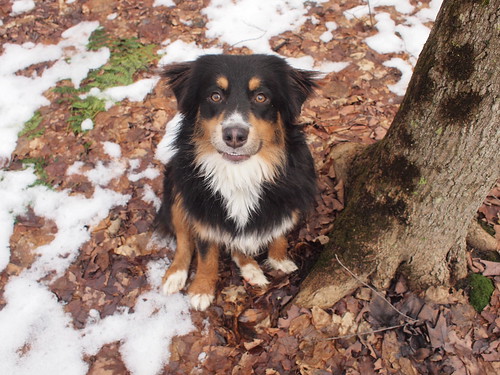
Meet Jayber.

21 September 2014

P9199491
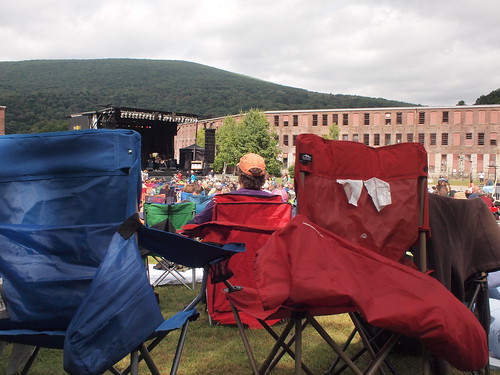
FreshGrass at Mass MoCA this weekend, and there were many good performances, but the two standouts were Valerie June and the Carolina Chocolate Drops. If you ever get the chance to see either live, take it.

And...that's about all I've got to say for myself, this time.

28 August 2014

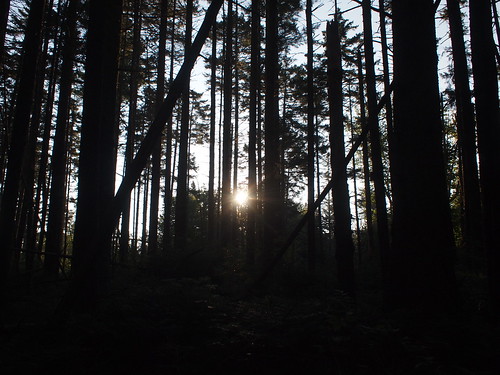
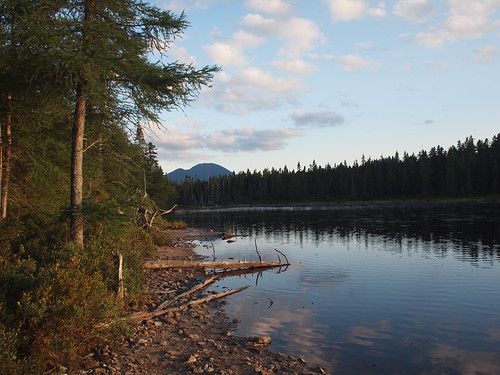
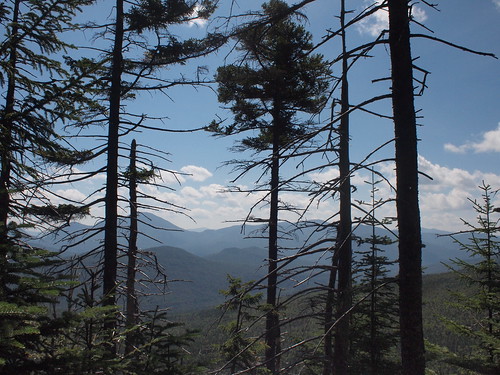
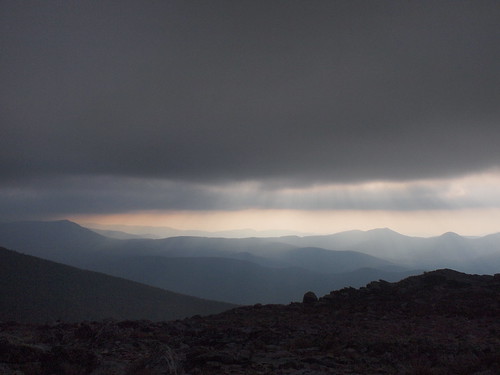
Trying to write something to go with these photos, and I'm coming up a bit dry. There's no reason for that, though--there's so much I could say. Maybe I feel like I've said it already. Another backpacking trip; another stretch of mountain scenery, another story that's better experienced than told. Still, it was a good experience: bright mornings and cool evenings, occasionally brutal scrambles up rocky trails, sunrise and sunset from mountain ridges.
This time I was in Pemigewasset Wilderness in White Mountain National Forest, which I guess gives me the opportunity to reflect on our national wildernesses, the definition of wilderness, things like that. The Wilderness Act turns fifty this year. Pemigewasset itself was designated in 1984, so its federal designation is only thirty years old--though of course, the land is much older than that, which is perhaps what makes the designation important: it's a decision of leave this be. I passed a rusted out stove from a logging camp back in the woods, a mark of history and human presence--though of course the trails I was walking were also a mark of human presence. But for the most part the forest was quiet, and when I set up camp for the night the silence was a weighted reminder of my distance from roads and people. Whatever has happened, the forest rebounded, perhaps different but still real and vital. 
p.s. For another angle on national wildernesses, head on over to High Country News.

21 August 2014

I brought in several rolls of film to be developed a couple weeks ago, and got back an eclectic set of images--some from Norway, some from home, some from Saskatchewan, and a handful that appeared to have been taken years ago, by my brother, in New Hampshire and Wisconsin and maybe Vermont. And it's fun, to take short and long trips backwards in time to these other places. But as I keep reminding myself, I can only be in one place at a time.
It doesn't always feel that way, though. I took a quick trip up the mountain (that's Mount Greylock) yesterday and I found myself walking, pack on my shoulders, through Massachusetts and Norway at once: lush green woods on either side, heavy with rain and mist, and yet in my mind's eye I could see the sparser mountains of Norway. I didn't want to be back there (not yet, anyway)--I've enjoyed being home and reacquainting myself with New England's woods. But for a few moments Norway was as vivid to me as the real landscape around me, and I suppose it was a reminder of something I wrote in this blog a few weeks ago: I carry these places in the strange pockets of my mind and they will emerge like negatives from forgotten rolls of film; almost as real as life, even if they aren't.

What's a picture for? Or a memory? I'm asking, because I've got a hoard of both.

31 July 2014

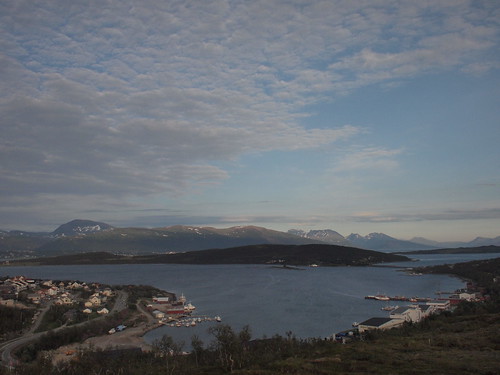
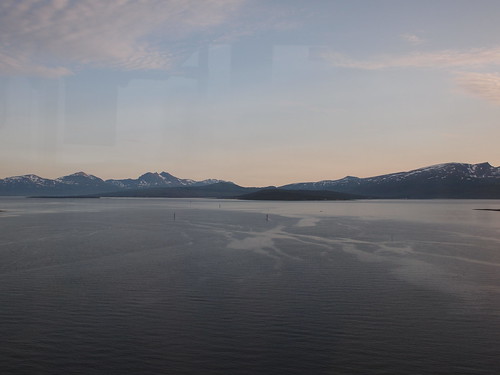
Well. I'm leaving Norway. And I feel a little bit of everything: wild hope for whatever comes next, eager anticipation for home, muddled regret at leaving this place where I've been for the past year and a half. Tromsø has been good to me. As I leave I hold that goodness in my head, coupled with another fact: it's time to go.

There's a quote from 'Walden' (if I haven't quoted 'Walden' enough in this blog): "I left the woods for as good a reason as I went there. Perhaps it seemed to me that I had several more lives to live, and could not spare any more time for that one." Right now Norway feels like a life I have lived out, and although there is more to this country--I haven't nearly plumbed its depths--it doesn't feel like there's more here for me right now. That's partly because what's here for me is the university, and I feel more than ready to put the strange cloister of universities behind me. And that's partly because--well. Sometimes the time comes to make a decision, and right now my decision is America and uncertainty, because I want to see what I find there. Between Norway and Canada, I've been gone for some time. 

I might have more to say, about what this place has given me, about what this place is. About the things I'm leaving and the things I'll miss. At the moment, though, it's hard to see much beyond the transition. I wonder, vaguely, about reverse culture shock. I look forward to seeing family and old friends. But over my last few weeks I've stood in these mountains, or down by the sea, and felt something pure and clear that I can only call love for this place. And now I'm leaving it behind indefinitely for somewhere familiar that feels a little bit foreign, and although I'm looking forward I can't help but pause at the gate to look back. So I'll say it: Tromsø, I'll miss you. And whatever the future holds, I hope my experiences here can be a moveable feast; at the very least, I am certain I will carry them with me into the future, although I'm uncertain what guise they'll take. 

14 July 2014

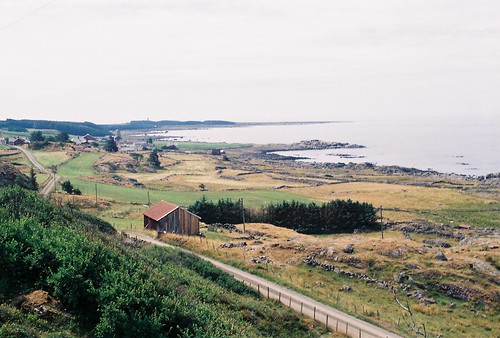
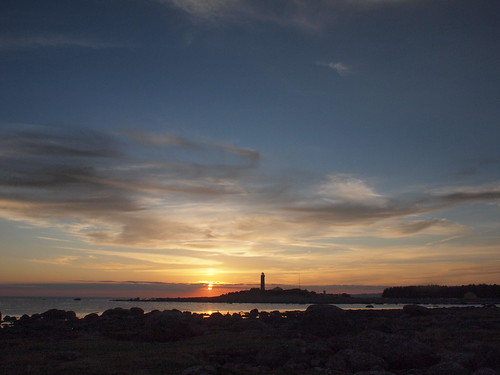
I was back in Lista last week, visiting the small, quiet place where my maternal grandmother came from. I stayed in her childhood home, a staunch house made of listing boards which purportedly dates to 1816. I spent my days walking along the coast, riding the old 3-speed bike from the barn out on the thin roads that thread through pastures, swimming in the bracing water, eating long meals in the tiny yard while Norwegian conversations ebbed around me.

My relationship with my Norwegian relatives is haphazard at best, stymied by the fact that my Norwegian remains poor. Lista--or Borhaug, or Vågsvoll, if we want to pin the location precisely--is not my home, of course. I'm not from there. I remember sitting on the front steps of the old house last summer and wondering what it would be like if I were from that small place in the shadow of the Lista lighthouse; it would be different, surely, and I would be different. So, no, it's not where I'm from. But it's as close as I get in Norway, and even as I fall out of step with these Norwegian conversations, I'll occasionally skim from them a story about my grandparents, and inside the house their are photographs of my grandparents, my parents, myself. So if the house is not home, it is not unfamiliar, either. Lista is similar: it is, after all, a place I've been before--last summer, last spring, ten years ago, twenty-four years ago. I know the roads in a loose way, enough not to feel lost. And I have family here who will embrace me, even if I am definitively American and a little at odds; because there is no question about the fact that I am family. And maybe that's part of why Lista feels a little bit magic: I am not from Norway, but I'm tied to this particular part of Norway, to this place. The cords have been frayed by time and salt, but they're there, tenuous but real.

While we were sitting in the tiny yard that's wedged in between the house and the road, eating rice pudding and drinking coffee, one of my mother's cousins told me, first in Norwegian and then in English, that Tante Sine--my grandmother--used to say that it's the same sun, same moon, over Lista and the U.S.A. And I suppose she was right. But as I watched the full moon rounded itself out over Lista, I wasn't sure how much it mattered. I was happy to be where I was.

10 June 2014

I graduated a few days back, I guess. In Saskatoon, it was convocation, and my graduate degree was formally bestowed upon me, although I was not there to receive it. Thanks to the mail and the transitive properties of degrees, though, I'll still be getting that piece of paper eventually, and I have the dubious privilege of saying that I hold a master's. And now I have the similarly dubious privilege of saying "What next?"

I got an email from my department on the occasion of my graduation containing that old chestnut that's ostensibly from Thoreau: "Go confidently in the direction of your dreams. Live the life you have imagined." I recently re-read 'Walden' and in their original place I can milk some meaning from those words, but denuded of context, as they so frequently are, those two sentences become the sort of meaningless platitude that's difficult to do much with. By contrast, here's the actual quote:

"I learned this, at least, by my experiment: that if one advances confidently in the direction of his dreams, and endeavors to live the life which he has imagined, he will meet with a success unexpected in common hours. He will put some things behind, will pass an invisible boundary; new, universal, and more liberal laws will begin to establish themselves around and within him; or the old laws be expanded, and interpreted in his favor in a more liberal sense, and he will live with the license of a higher order of beings. In proportion as he simplifies his life, the laws of the universe will appear less complex, and solitude will not be solitude, nor poverty poverty, nor weakness weakness. If you have built castles in the air, your work need not be lost; that is where they should be. Now put the foundations under them."

If, Thoreau wrote, and that makes such a difference. It's not a command or an imperative, just a possibility, an option. But it's a possibility with the radical potential to carry a person across borders into fresh country.

So I don't know what's next. I'm weighing possibilities, or perhaps more rightly, I'm weighing dreams: one against the other, this against that. Nothing is ever as simple as a platitude, and most people can't live in air castles. For now, though, I'm comfortable living in this liminal place while I sort myself out. It's not tenable indefinitely, but it'll do in the interim.

22 April 2014

P4199130
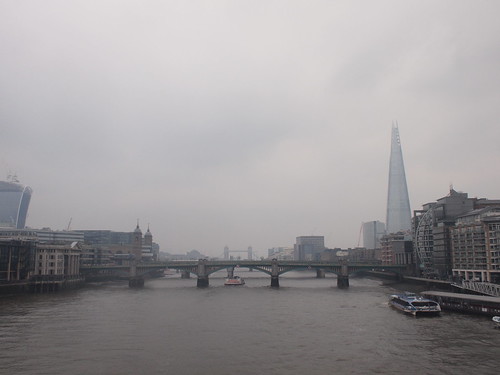
I ended my trip in London, which was probably a good place to finish, because I was tired and the English-speaking nature of...England...made London the easiest city for me to navigate. I stopped in at some tourist destinations, but I also did simple things: ate street food, went to a movie--the sort of things you can do anywhere, technically, but it was nice to be in a city where the options for food and movies were varied and plentiful. I'm still trying to parse what, precisely, the purpose of all this travel is, but maybe it can be as simple as enjoying the advantages one place offers that yours does not. Europe has history and culture distinct from America; these cities I've been visiting have things Tromsø does not. But now I'm back in Tromsø, curled up in bed with a mug of tea, and outside it is snowing. Tomorrow I will go back to work and dailiness, because right now Tromsø holds something the places I've been visiting lack: my life.

19 April 2014

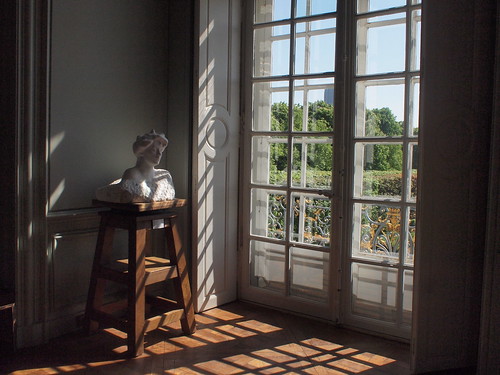
Paris was next on my whistle-stop tour, and I threw it in at least partly because I overdid it on Hemingway this fall. Well, not just Hemingway; there's also Rilke, who wrote: "I am in Paris. People who hear this are glad; most of them envy me. They're right. It is a great city, great and filled with strange temptations." While here, I visited the Musée Rodin and learned that Rilke and Rodin were friends, and wondered, as I ambled past shops and brasseries, who of these writers and artists had been here, or here, or here. But I also wondered about our ideas of Paris, the way the city is structured in our minds. I hadn't entirely wanted to come here. I didn't need to see the Eiffel Tower (though now I have), and something about this city's reputation--pretentious, romantic--never quite captured me. Except then--reading about the Lost Generation, reading Rilke's 'The Notebooks of Malte Laurids Brigge'--it did. So I added Paris to the itinerary.
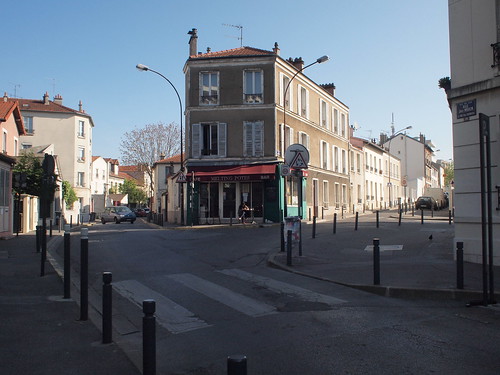
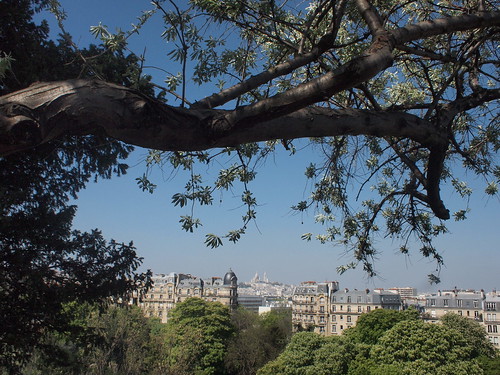
I rented a shoebox apartment for the handful of nights I was in the city, on the fourth floor of a canalside building on the north side of town, close to the Parc des Buttes Chaumont. To reach most of the conventional tourist sites I had to catch the metro or trek several miles, but the neighborhood was lively and I could get a baguette and an almond croissant from the bakery on the corner for just over two Euros, which is a privilege that shouldn't be discounted. The New York Times recently ran an article called 'My European Ritual,' which asked the residents of various European cities to describe their rituals. For the few days I was there, my Paris ritual was as simple as this: going down four flights of spiral stairs, walking to the corner, buying a baguette and an almond croissant, eating the croissant for breakfast while I drank tea and made the baguette into sandwiches. It's the sort of touchstone that makes away feel a little bit like home. And then I would walk out into the city, which was awash with sun, which was very old and very large and had plenty of stories to tell. I didn't have time to listen to all of them, but I heard a few--most notably in the small, idiosyncratic, Musée National Gustave-Moreau--and that was enough to convince me: Paris is a great city, and so much more than I had (naively, I think) anticipated.

15 April 2014

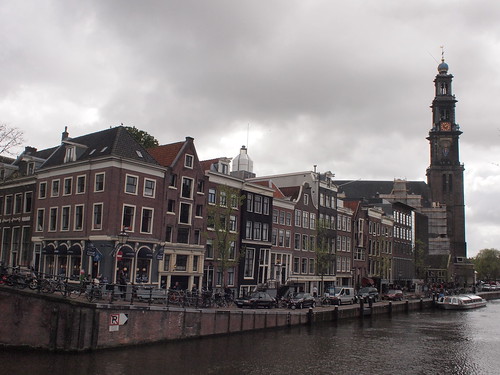
Amsterdam was the second stop on my current tour, at least partly because of my brother's enthusiastic reviews of the city. There are plenty of good reasons to visit Amsterdam, I'm sure, but if I'm honest I hardly knew anything about Amsterdam prior to my arrival except that Jack liked it. If pressed I might've been able to come up with a few other things--Anne Frank, pot, bicycles. I'll admit that I skipped the Anne Frank house and the pot. But the bicycles won me over.
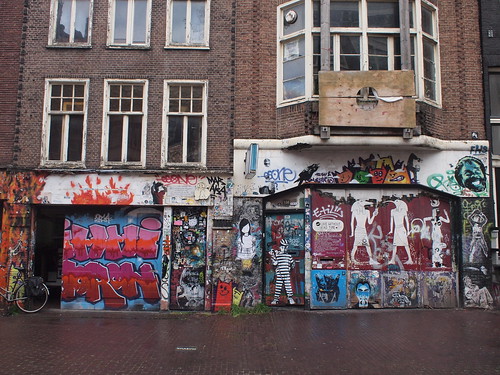
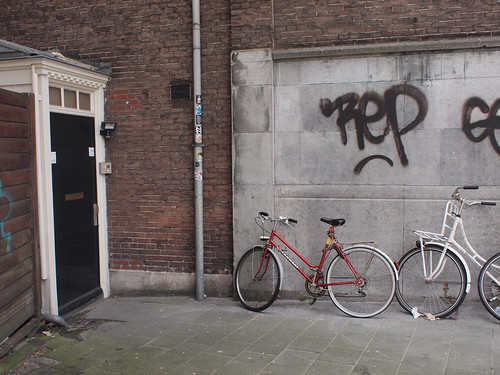
There are heaps of bicycles in this city, and I mean that literally: they are heaped on bike racks, piled around lampposts, lumped into piles with no discernible base. And, the bicycles are used, besides: cyclists whiz around Amsterdam's narrow bike lanes, across rickety cobblestones, over bridges, along canals. And I joined them. I'm not sure I need to make another good decision for the rest of my trip, because I rented a bicycle in Amsterdam and that was a perfect decision. I took my bike out at night, flicked on the generator-powered headlamp, and rode circuits through the city's parks and alleyways with no destination in mind. I rode past tourist attractions I didn't bother visiting. I really don't care that I never visited the galleries of the Rijksmuseum, because I rode under the museum's ornate facade at night and that was enough. I am sure there's more to Amsterdam than I saw, but isn't that true of any place a person visits? And a few days spent flying through Amsterdam's streets on a bicycle will be enough for me to have something of this city in a pocket of my mind, a small point of reference. I'm writing this in the downstairs of a coffee shop (the kind that just sells coffee, thanks), and outside the window I see a cyclist fly past, and then another, and then another. Bicycles are ubiquitous here, and for that reason alone, I'm happy that's the one thing I've taken from this city. Which is good, because it's time for me to catch a train.

14 April 2014

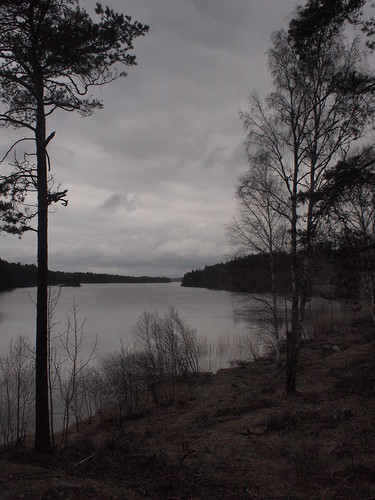
I am in transit again, taking a short, somewhat haphazard tour of Europe. First stop: Stockholm, where a friend I met in Tromsø was kind enough to host me. Having a guide makes it especially easy to slip into the dailiness of a place: grocery shopping, navigating public transit. But that doesn't entirely preclude the rite of wandering around and gawping at things. There's plenty I could say about Stockholm; it's old, lively, beautiful. I liked it. But I also liked the last day of my visit, when my friend and I took the commuter train out as far as we could, then walked further, on train tracks that hadn't seen a train in years, until we reached a quiet lake. We wished for a boat. We explored the woods and admired the handiwork of the local beaver. We sat on the ground and ate cheese and sausages. In short, we made a day of it, taking a small vacation from both our lives. And then we got back on the train, and slipped through the Swedish countryside and back into the capital city, as you do.

10 March 2014

You know how it goes: if the story's about a dog, the dog dies at the end. It doesn't really matter how--maybe Old Dan and Little Ann tree a mountain lion, maybe Old Yeller fights a rabid wolf, maybe death just steals the dog away quietly, like a thief in the night. Or maybe it's a car, or a cancer. But those are dog stories, children's books that win Newbery medals, and this is a dog, not a story, and even though anyone with any sense could predict how his story ends, it's still enough to make me cry.

I'm tempted to try to write something that would convince you, whoever you are, that Moose was wiser than other dogs, kinder, tougher, better. Not just a good dog, but one of the best, a member of some rare pantheon. I'm inclined to believe he was. But no story would capture the whole of it, of him, and even if he was ordinary in every way, completely unbeguiling, it wouldn't matter. Moose was a member of the family for thirteen years--a span of time that seems, now, at once short and long. More importantly: Moose was Moose, and we loved him.
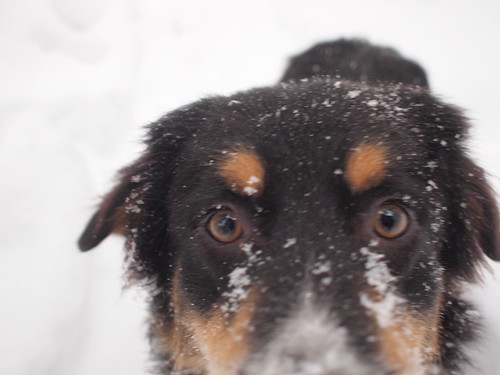
What else is there to say? Oh, Moosel, Mooseling, Mighty Moose, Mister Moose (your first name, the one you weren't given so much as you claimed). I'll miss you; the way you wiggled your body like it made up for the lack of a wagging tail, the steady 1-2 thump of a dropped tennis ball that was your calling card, the gaze I could only describe as soulful, your boot-black nose, the delicate way you ate berries from the bush, even your frustrating tendency to stand in front of cars pulling into the driveway. Every time I came back home you greeted me like it was the best part of your day, your week, your life, and that made it one of the best parts of mine.

Good bye, old friend, and thank you for all of it.

25 February 2014

It's the same old story, really, and I want to dust off the same old quote from Thoreau--"The surface of the earth is soft and impressible by the feet of men; and so with the paths which the mind travels."--because my mind's been circling around like it hasn't got anything better to do. Maybe it hasn't. But I recently read another piece about home, and about the way we as humans upend our lives to move between places and countries. It's called 'On Not Going Home', and it's by James Wood, a English ex-pat living in America. It's a long one, and I'm not going to try to offer a precise summation; mostly I want to burrow back into my own feelings about living abroad. The subject dogs me.

Over the summer I picked up a copy of Hemingway's 'A Moveable Feast,' and I read it this fall, looking for some sort of insight about what it means to be an American abroad. I didn't find it. I am not Hemingway (nor was meant to be); the Lost Generation isn't mine; Tromsø isn't Paris (I have hopped from one city nicknamed after Paris to another; Saskatoon is ostensibly 'the Paris of the prairies', and Tromsø's been called 'the Paris of the north'). Hemingway's Paris was not just the city: it was Gertrude Stein and F. Scott Fitzgerald, Ezra Pound and James Joyce. I have a ragged sort of community here in Tromsø, but I wonder at how American Hemingway's Parisian community was, fundamentally.

Even if Hemingway's expatriate life was a different breed then mine, the quote the title of 'A Moveable Feast' was drawn from aligns with how I see the world: "If you are lucky enough to have lived in Paris as a young man, then wherever you go for the rest of your life, it stays with you, for Paris is a moveable feast." I've never been to Paris, but I carry moveable feasts with me nonetheless; sometimes it seems that every place I've ever lived is somewhere in the knapsack of my mind. This week I was reading Donna Tartt's 'The Secret History', which takes place at a thinly veiled simulacrum of Bennington College and sends its characters gallivanting around the tri-state area. The book is about a murder and the leads are largely unsympathetic, but the landscape is familiar and the writing is evocative, and when the characters stopped in at what could only be the Cambridge Hotel (again, thinly veiled, but I can't imagine it's a place many would bother to recognize), something inside me ached. It's been a little while since I felt something I could tag so completely as homesickness; I savored it.

Which brings me back around to Wood's essay, where he notes, "For me, English reality has disappeared into memory, has ‘changed itself to past’...In America, I crave the English reality that has disappeared; childhood seems breathingly close." Wood has lived outside his home country for 18 years; I will not pretend I can match that measure. But I think Wood captures a fundamental piece of the moveable feast: the places we depart primarily live, for us, as part of the past. The Cambridge Hotel has, after all, closed. Hemingway's Paris was people as well as place. This is not to say--this is not to say anything in particular, except that maybe even a place that counted as home will not be the same on return. I am charting a course home, now, but I rather suspect that whatever I find there will be nearly as foreign to me as what I've found here; that the place I miss is not just a place, but a time. Still, my moveable feast feeds me well.

23 January 2014

A couple weeks back I returned to Tromsø, as I've been doing, now, since I arrived a year ago. I leave Tromsø, I come back. The route, even when it wends its way through airports, feels familiar now. I will watch movies between Boston and Keflavik, even when I should be sleeping; I will sleep from Iceland to Oslo, even if should stay awake; I will drink black tea between Oslo and Tromsø, because my sleep schedule is already pretty well shot and they don't have ginger ale.

It's weird to me that I take air travel as a matter of course now, because I've always found the process of picking a person up out of one landscape and dumping them down in the midst of another a bit strange. There may not be much but ocean between Massachusetts and Norway, but my journey erases it and replaces the specific vastness of the Atlantic with the small void of an airplane seat, like any seat on any airplane. And, for all my gripes, I'm grateful for it, because I would not be able to hopscotch so easily between continents otherwise. But my return to Tromsø struck me, not when the plane touched down on a dark afternoon two weeks ago, but when I came out from the mountains this past Sunday. It's strange for me to be rounding a year here, to cross familiar landscapes in familiar seasons. Maybe--probably--it shouldn't be. On the other hand, one year ago I came to Norway for sixth months, and if I'm still here twelve months later, there's something a bit odd going on. Or I am very poor at planning (truth).

All I can say is that it's nice to be settled for a time, to come back. I'm looking forward, now, and towards other places, but for the time being it's good to be back in Tromsø, where life is cold and dark and--strangest of all--familiar.

21 December 2013

28 November 2013


Happy Thanksgiving.

24 November 2013

Tomorrow morning I get to board a plane headed south, and then another couple planes headed west to North America for Thanksgiving and Christmas. No matter how excited I am for the holidays, it makes me a little tired just thinking about the time I will spend sitting on the floor in airports, standing in line at customs, trying to sleep without reclining my chair. And, beyond that, it's strange that over the course of one day (albeit extended by time zone shifts) I can hop from Norway to Iceland to America. And then I'll do the whole thing in reverse in January, as my life continues to be split between these two countries (I don't know how many times I've said, "Oh, I have that in America": a car, snowshoes, a bike). 

But, all my globetrotting quandaries aside, we're slaloming into the holiday season, and that's something, isn't it? And I'm glad I'll be back in the U.S. for that, because Norway doesn't really know how to do pie. 

21 October 2013

15 October 2013

Last week I was talking to some Norwegians when I whipped out my phone to share pictures. I don't have a Norwegian SIM card (thanks, AT&T and SaskTel for my locked phones, really appreciate that) so my telephone is basically a game-playing and picture-sharing device. Most of the picture-sharing involves pictures of my cranes, because my cranes are one (perhaps the only) goofy facet of my life for which people request photographic evidence (didn't I predict that cranes would become my wallet pictures? I'm pretty sure smartphones are the new version of wallet photographs). But there are some pictures of home on there, too, and when those came up I said, "Look! That's where I from!" because I take endless delight in sharing photographs (hence this blog).

"But where are the people?" asked the guy holding my phone.

"They're in the valley," I said.

It occurs to me now that he may've been wondering where the pictures of my family were; I'm genuinely not sure. If that's the case, my family was probably behind me. But the people--the people were in the valley, for the most part. That's where people congregate, isn't it? In valleys, along  rivers.

Still, the question and my interpretation of it revealed my own bias for the illusion of wilderness; so many of the pictures I've posted here since I returned to Norway have been of the mountains, not the valley (or, in Tromsø's case, the island, but compared to the mountains Tromsøya is low and flat and may as well be the valley). After all, I spend most of my time here, with people, and peaks only a distant silhouette.